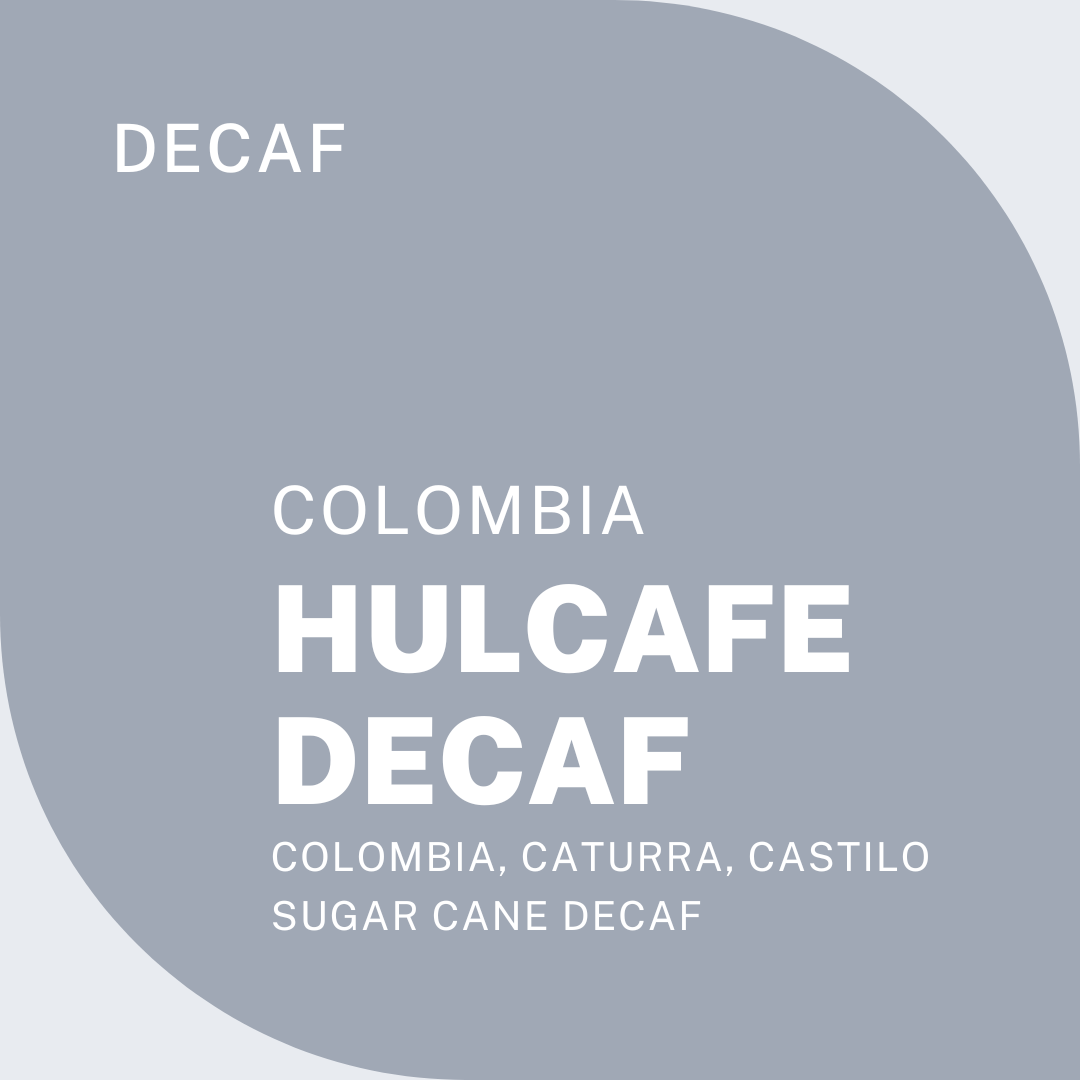
Hulcafe Decaf
- Narino, Small farmers of Narino, Colombia
- Wet Decaf
- caramel, apple, sweet lemon
- 1900 meters
An exceptionally sweet and balanced cup of decaffeinated coffee. The coffee has a medium to full body, balanced citrus acidity, and aromas of apple and caramel.
*The price includes VAT. All our coffees are whole beans. Grinding per request.
Specifications
Flavor profile
caramel, apple, sweet lemon
Aroma
- Chocolate
- Floral
- Fruity
- Funky
- Spicy
Roast profile
- Light
- Medium
- Dark
Optimal quality
Days 5–50 after roasting
Store coffee in a dry and cool place. For optimal quality, consume within 7 days of opening the bag.
Make coffee at home
Coffee: 18 g
Beverage weight (yield): 42 g
Extraction time: 26–27 seconds
Water temperature: 94 °C
Water TDS: 90 mg/l
Grinding: very fine (approximately 200–300 μm)
PRECAUTION INSTRUCTIONS:
1.) Before starting, clean the filter basket – make sure it is dry and clean.
2.) Drain the remaining water from the machine.
3.) Accurately dose 18 g of freshly ground coffee into the filter basket.
4.) Evenly level the ground coffee and press it down with a tamper to remove all air from the coffee cake.
5.) Insert the portafilter into the machine. Start the extraction immediately, aiming for 26–27 seconds and a yield of 42 g.
Coffee: 15 g
Water: Cold water 150 ml
Time: approximately 3 minutes
Grinding: medium fine (400–500 μm)
PREPARATION INSTRUCTIONS:
1.) Fill the lower part of the coffee maker with cold water up to the safety valve.
2.) Place 15 g of freshly ground coffee into the coffee maker filter. Flatten the coffee gently, without excessive pressure.
3.) Once you have assembled the upper and lower parts of the coffee maker, place it on a medium-hot heat source.
4.) When the water in the lower part has boiled, it will slowly pass through the coffee and collect in the upper part. Then remove the coffee maker from the heat source and serve.
Coffee: 15 g
Water: 150 ml (cold water)
Preparation time: 3–4 minutes
Grinding: extra fine (approx. 50–100 μm)
PREPARATION INSTRUCTIONS:
1.) Pour 150 ml of cold water into the coffee pot and add 15g of freshly ground coffee to the surface of the water.
2.) Let the coffee sit on the surface of the water until the water boils. Then stir the coffee thoroughly and quickly with the water.
3.) When a thick foam begins to form in the coffee pot, remove the coffee pot from the heat.
A story about coffee
Hulcafe is a Colombian company specialized in the production, processing and export of high-quality coffee beans and services related to the entire coffee value chain. The company operates mainly in the regions of Huila and Quindío, where its operational centers and the Trilladora Laboyana plant, where part of the processing and decaffeination process takes place, are located. Hulcafe was founded with the clear goal of improving the quality of the coffee crop and supporting traditional producers, combining family tradition, ethical business practices and innovative technological solutions. foundation+1
The company collaborates with local producers and communities and offers services that include bean selection, processing, harvesting, sports preparation and export of coffee beans of different profiles — from green coffees to roasted and packaged products. Hulcafe is also involved in international markets, thus providing access to its premium coffees to global buyers. hulcafe.com
Processing method – Sugar Cane Decaf (EA)
The so-called sugar cane decaffeination process is used to decaffeinate Hulcafe Decaf coffee. Sugar Cane Decaf method, based on ethyl acetate (EA) — a natural compound obtained from sugar cane. This process is considered one of the most gentle and “natural” decaffeinations, as it respects the structure of the raw coffee bean and preserves most of the aromatic properties. funt.coffee+1
The process is as follows:
Preparation of green coffee beans – the beans are first moistened with water, which allows their cell structure to expand and releases caffeine.
Use of EA – ethyl acetate selectively binds caffeine and removes it from the bean, with minimal impact on other aromatic compounds.
Rinsing and drying – after caffeine extraction, the beans are thoroughly rinsed and gently dried to an optimal moisture level.
Due to the natural origin of ethyl acetate (sugar cane), this method is considered a particularly clean and tasty decaffeination technique that does not add artificial or aggressive chemicals and preserves the profile of the original coffee. The result is a decaffeinated coffee with high aromatic integrity and pleasant sweetness, suitable for various preparation methods (filter, espresso, alternative methods).